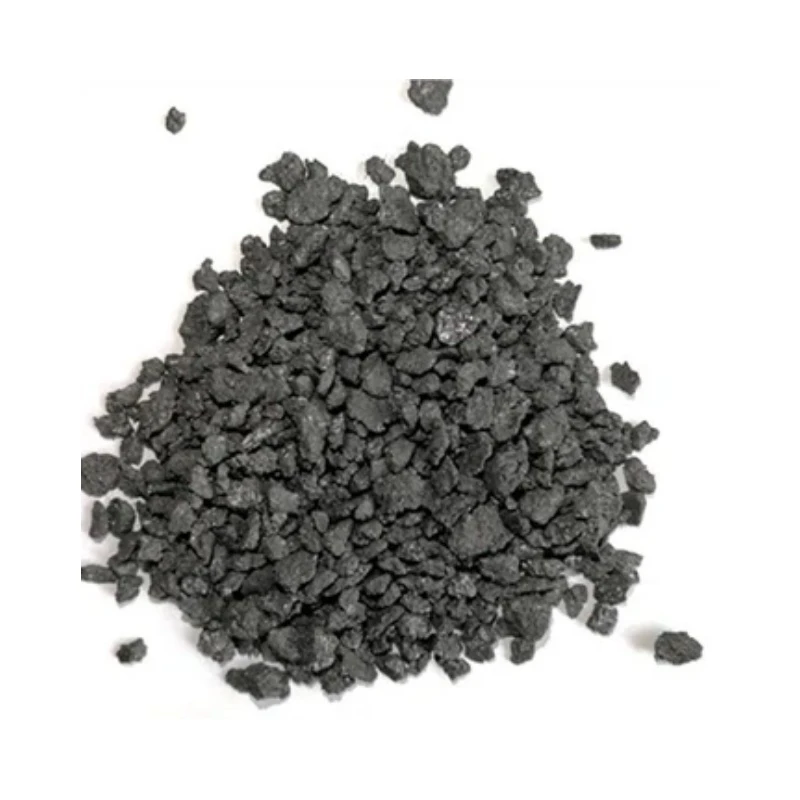
low sulfur petroleum coke
Navigating the Landscape of High Carbon and Low Sulfur Graphitized Petroleum Coke In the realm of advanced industrial materials, carbon petroleum coke stands out as a critical component, underpinning various high-temperature and electrochemical processes. As an indispensable precursor for graphite electrodes, anodes, and specialty carbon products, its quality, particularly its carbon content and sulfur purity, directly impacts the performance and efficiency of downstream applications. The global demand for high carbon and low sulfur graphitized petroleum coke is experiencing a significant surge, driven by the rapid expansion of electric arc furnace (EAF) steelmaking, the burgeoning electric vehicle (EV) battery industry, and the increasing adoption of aluminum smelting processes. This article provides an in-depth exploration of the global market for high carbon and low sulfur graphitized petroleum coke, offering a comprehensive look at industry trends, technical specifications, diverse application scenarios, and the inherent advantages this material presents. We will delve into the intricate manufacturing processes, compare leading manufacturers, discuss tailored solutions, and present compelling application case studies, all supported by robust data and industry insights to bolster user confidence and highlight the authoritative expertise required in this specialized field. Industry Trends and Market Dynamics The market for graphitized petroleum coke is fundamentally influenced by shifts in the global industrial landscape. A primary driver is the escalating emphasis on environmental regulations, which favor technologies like EAF steel production that utilize higher proportions of recycled steel, thereby increasing the demand for high-quality graphite electrodes derived from carbon petroleum coke . Simultaneously, the rapid expansion of renewable energy infrastructure and energy storage solutions is propelling the need for advanced battery technologies, where graphitized petroleum coke plays a crucial role as a core anode material. Key trends observed in the market include: Sustainability Drive: Increased adoption of green technologies and stringent emission standards are pushing industries towards higher-purity carbon materials that contribute to cleaner production processes. Technological Advancements: Continuous innovation in graphitization processes is yielding materials with enhanced crystallinity, lower impurities, and superior electrical conductivity, broadening the application spectrum of coke and refined petroleum products . Supply Chain Resiliency: Geopolitical factors and trade dynamics are prompting industries to diversify their sourcing strategies for critical raw materials, including high-quality petroleum coke. Rising Demand for EVs: The electric vehicle revolution is directly correlating with an increased need for specialized graphitized anode materials, placing significant upward pressure on the demand for low-sulfur carbon petroleum coke . Projections suggest that by 2030, EV battery anode material demand alone could consume a substantial portion of the global graphitized coke supply. The convergence of these trends signifies a robust and expanding market for high-quality graphitized petroleum coke. Companies that can consistently supply materials meeting stringent technical specifications and offer reliable, customized solutions are best positioned to capitalize on this growth. Technical Parameters and Specifications of Graphitized Petroleum Coke Understanding the critical technical parameters of graphitized petroleum coke is essential for its optimal application. These parameters define the material's suitability for specific industrial processes and dictate its performance characteristics. Key specifications typically include carbon content, sulfur content, ash content, volatile matter, resistivity, true density, and particle size distribution. For high carbon and low sulfur graphitized petroleum coke, the emphasis is on achieving exceptionally high purity and crystallinity through a rigorous graphitization process. This process, involving heat treatment at temperatures exceeding 2500°C, transforms the amorphous carbon structure into a highly ordered graphitic lattice, significantly enhancing its electrical and thermal conductivity, and chemical stability. Key Parameter Breakdown: Carbon Content: Typically >99.0% for high-purity applications, indicating minimal non-carbon impurities. Sulfur Content: Crucially low, often <0.05% or even <0.03% (ppm levels). High sulfur leads to environmental emissions and can poison catalysts or degrade product quality in metallurgical processes. Ash Content: Reflects the inorganic impurities, ideally <0.5%. Low ash content is vital for applications requiring high purity, such as in nuclear or battery industries. Volatile Matter: Indicates the easily vaporizable components, typically <0.5%. Lower volatile matter ensures better thermal stability and less off-gassing during high-temperature processing. Electrical Resistivity: A key indicator of conductivity, ranging from 500-1000 µΩ·m for less graphitized material down to <20 µΩ·m for highly graphitized material. Lower resistivity means better current flow. True Density: Approaching the theoretical density of graphite (2.26 g/cm³), typically >2.20 g/cm³, indicating a highly ordered crystal structure. Particle Size Distribution: Customizable based on application. Finer powders for battery anodes, larger grains for metallurgical electrodes. Typical Specifications for High Carbon, Low Sulfur Graphitized Petroleum Coke Parameter Unit Typical Value (High-Grade) Industry Standard Range Fixed Carbon % >99.5 99.0 - 99.8 Sulfur Content % <0.03 0.03 - 0.05 Ash Content % <0.3 0.3 - 0.5 Volatile Matter % <0.5 0.5 - 1.0 True Density g/cm³ >2.23 2.20 - 2.25 Electrical Resistivity µΩ·m <20 15 - 30 These specifications are crucial for product consistency and performance. Manufacturers of high-grade carbon petroleum coke adhere to rigorous quality control protocols to ensure each batch meets the stringent requirements of advanced industrial applications. Detailed Process Flow of Graphitized Petroleum Coke Manufacturing The transformation of raw petroleum coke into high-purity graphitized petroleum coke is a complex, multi-stage thermochemical process. It begins with raw materials and culminates in a material with highly ordered crystalline structure and superior properties. The meticulous control at each stage is paramount to achieving the desired product quality, particularly for applications requiring extremely low sulfur and high carbon content. The process typically involves Calcination, Briquetting (optional), Graphitization, and Post-processing. Stage 1: Raw Material Selection and Pre-Treatment The journey begins with carefully selected green petroleum coke. The quality of the raw green coke, specifically its sulfur content, volatile matter, and metallic impurity levels, directly influences the final graphitized product. High-grade needle coke or sponge coke, known for their anisotropic structure and low sulfur content, are preferred. Pre-treatment might involve crushing and screening to achieve a desired particle size distribution before calcination. Stage 2: Calcination Calcination is the initial heat treatment process, typically carried out in rotary kilns or shaft kilns at temperatures ranging from 1200°C to 1400°C. This step serves multiple critical purposes: Volatile Matter Removal: Drives off residual hydrocarbons and moisture, preventing puffing or cracking during subsequent high-temperature processing. Densification: Increases the bulk density of the coke particles. Structural Stabilization: Initiates the initial ordering of the carbon structure. Sulfur Reduction: While the bulk of desulfurization occurs during graphitization, some labile sulfur compounds are removed here. Stage 3: Briquetting/Forming (If Required) For certain applications, especially those requiring formed shapes like electrodes or specific granule sizes, the calcined coke may be mixed with a binder (e.g., coal tar pitch) and pressed into briquettes or other desired forms. This step, often involving processes akin to casting or extrusion depending on the final product, prepares the material for the intense graphitization phase. Stage 4: Graphitization This is the most critical and energy-intensive stage, where the amorphous carbon structure is converted into a highly crystalline graphite structure. It is typically performed in Acheson furnaces (an electric resistance furnace) or batch graphitization furnaces, reaching extremely high temperatures, often exceeding 2500°C, and even up to 3000°C. The process involves: High-Temperature Treatment: Under inert or protective atmosphere, carbon atoms rearrange into hexagonal layers. Impurity Removal: Most remaining impurities, especially sulfur, are volatilized and removed at these extreme temperatures. This is where the "low sulfur" characteristic is truly established. Crystallinity Improvement: The carbon crystallites grow larger and become highly oriented, leading to increased electrical and thermal conductivity. Stage 5: Post-Processing and Quality Control After graphitization, the material undergoes cooling, crushing, milling, and screening to achieve the desired particle size distribution. Rigorous quality control is applied at this stage, including X-ray diffraction (XRD) for crystallinity, elemental analysis for purity (carbon, sulfur, ash), bulk density, and electrical resistivity measurements. Detection Standards: Adherence to international standards such as ISO (e.g., ISO 14001 for environmental management, ISO 9001 for quality management) and ASTM (e.g., ASTM D4809 for ash content, ASTM D4239 for sulfur content) is critical. Some specialized applications might require adherence to ANSI or other regional standards. Usage Lifespan and Applicable Industries: The exceptional purity and structural integrity of graphitized petroleum coke contribute to the extended lifespan of products manufactured from it. This material is indispensable across various industries due to its unique properties: Metallurgy (Steel, Aluminum): Primarily for the production of graphite electrodes for EAF steelmaking and pre-baked anodes for aluminum reduction cells. Its low sulfur content prevents contamination and improves metal quality. Chemical & Petrochemical: Used in the manufacture of various carbon-based materials, as a carburizer, or in specific catalytic processes where high-purity carbon is required. The properties of coke in petroleum are directly enhanced by this processing. New Energy (Batteries): As a crucial anode material for lithium-ion batteries, particularly in electric vehicles and energy storage systems, where its high carbon content and precise particle size enable superior charge-discharge cycles and energy density. Nuclear Industry: For neutron moderation and as a structural component due to its high purity and thermal stability. Water Supply & Drainage (filtration): While not a primary structural material, certain activated carbon variants derived from petroleum coke are used in water purification and filtration due to their excellent adsorption properties, contributing to corrosion prevention in pipelines and treatment plants. In these typical application scenarios, the advantages of graphitized petroleum coke are clear: superior electrical conductivity leading to energy savings in electrochemical processes, exceptional chemical inertness providing corrosion resistance in aggressive environments, and high thermal stability ensuring reliability in extreme temperatures. Technical Advantages and Application Scenarios The distinctive properties of high carbon and low sulfur graphitized petroleum coke confer significant technical advantages across a spectrum of demanding industrial applications. These advantages are direct outcomes of its high purity, ordered crystalline structure, and optimized physical characteristics. Key Technical Advantages: Exceptional Electrical Conductivity: Graphitization dramatically reduces electrical resistivity, making it an ideal material for electrodes in EAF steelmaking and aluminum smelting. This translates to lower power consumption and improved furnace efficiency, embodying significant energy savings . High Thermal Conductivity and Shock Resistance: The ordered graphite structure efficiently dissipates heat, and its thermal expansion coefficient is low, making materials made from it resistant to thermal shock, critical in high-temperature processes like those involving coke and refined petroleum products . Chemical Inertness and Corrosion Resistance: Graphitized carbon exhibits excellent resistance to most acids, alkalis, and salts, even at elevated temperatures. This property ensures durability and longevity in aggressive chemical environments, such as those found in the petrochemical industry or in specific segments of water supply and drainage applications where corrosive agents are present. This provides inherent anti-corrosion properties to the system components it is part of. Low Impurity Profile (Especially Sulfur): Minimal sulfur content (typically <0.05%) is vital for environmental compliance and product quality. In steelmaking, low sulfur prevents the embrittlement of steel. In battery applications, sulfur can degrade electrochemical performance. High Carbon Purity: A fixed carbon content exceeding 99% ensures consistent performance and minimizes undesirable side reactions in sensitive applications. Diverse Application Scenarios: The versatility of high carbon and low sulfur graphitized petroleum coke allows its application across various high-value industries: Electric Arc Furnace (EAF) Steelmaking: As the primary raw material for ultra-high power (UHP) graphite electrodes. The conductivity and thermal shock resistance of these electrodes are paramount for efficient steel scrap melting. Aluminum Smelting: Used in the production of pre-baked anodes for the Hall-Héroult process. The low sulfur content is crucial to prevent sulfur emissions and contamination of aluminum. Lithium-ion Battery Anodes: Processed into spherical graphite, it serves as a high-performance anode material for rechargeable batteries, critical for electric vehicles, consumer electronics, and grid-scale energy storage. Foundry and Metallurgy (Carburizer/Recarburizer): Added to molten iron or steel to precisely control and increase carbon content, improving the mechanical properties of castings and alloys. Its high carbon yield and low impurity profile are highly valued. Specialty Carbon Products: Used in the manufacture of carbon fibers, carbon composites, nuclear graphite, and other advanced materials where purity and performance are paramount. These applications underscore the indispensable role of high-quality carbon petroleum coke in modern industrial processes, demanding materials that meet stringent performance and environmental criteria. Manufacturer Comparison and Customization Solutions The global market for high carbon and low sulfur graphitized petroleum coke features several key players, each with distinct advantages in terms of raw material sourcing, production capacity, technological sophistication, and product specialization. When selecting a supplier, B2B decision-makers must consider not only price but also consistency, reliability, and the ability to provide customized solutions. Key Differentiators Among Manufacturers: Raw Material Integration: Manufacturers with integrated access to high-quality green petroleum coke (especially needle coke) often have a competitive edge in ensuring purity and consistent supply. Graphitization Technology: Advanced furnace designs (e.g., more energy-efficient Acheson furnaces, improved batch processes) and precise temperature control systems are crucial for achieving superior graphitization levels and impurity removal. Quality Control and R&D: Companies with robust ISO-certified quality management systems (e.g., ISO 9001, ISO 14001 ) and active R&D departments are better equipped to innovate and maintain consistent product quality. Some even hold FDA certifications for specific carbon-based applications. Customization Capabilities: The ability to tailor particle size distribution, specific surface area, electrical resistivity, and impurity profiles to client-specific requirements is a significant value-add. Example Manufacturer Comparison Table (Illustrative): Feature Manufacturer A (NL Graphite) Manufacturer B (Competitor) Manufacturer C (Specialty) Primary Focus High Carbon, Low Sulfur Graphitized PC General Calcined & Graphitized PC Battery Anode Materials Sulfur Content (Typical) <0.03% 0.05-0.1% <0.01% (special grades) Customization Offering High (Particle Size, Purity Adjustments) Moderate (Standard Grades) Very High (Specific battery chemistries) Certifications ISO 9001, ISO 14001, ASTM ISO 9001 ISO 9001, IATF 16949 Global Presence Strong Global Distribution Regional Focus Strong in Asia, expanding globally Customized Solutions: Leading suppliers of carbon petroleum coke recognize that "one size fits all" rarely applies in advanced industrial applications. Customized solutions are paramount, particularly for: Tailored Particle Size Distribution (PSD): From ultra-fine powders for battery applications (e.g., D50 < 20µm) to coarser grains for metallurgical additions (e.g., 1-5mm), precise PSD control is crucial for optimal performance. Specific Impurity Levels: While low sulfur is a general requirement, some applications might have stringent limits on other trace elements (e.g., iron, silicon, vanadium) which can be tailored. Surface Treatment: For advanced materials like battery anodes, surface modifications can enhance electrochemical properties and cycle life. Packaging and Logistics: Custom packaging (e.g., bulk bags, specific drum sizes, moisture-proof solutions) and optimized logistics strategies ensure material integrity and timely delivery. Choosing a partner capable of delivering consistent quality and flexible customization is key to operational efficiency and competitive advantage in demanding industries. Application Case Studies and Customer Feedback Real-world application cases demonstrate the tangible benefits of utilizing high-quality high carbon and low sulfur graphitized petroleum coke. These scenarios highlight how the material's superior properties translate into improved operational efficiency, product quality, and cost savings for industrial clients. Case Study 1: Enhanced Electrode Performance in EAF Steelmaking A major European steel producer faced challenges with electrode consumption rates and arc stability in their UHP EAF operations. Transitioning to graphite electrodes manufactured from NL Graphite's high-purity carbon petroleum coke , characterized by ultra-low sulfur content (<0.03%) and superior electrical conductivity, yielded significant improvements. Over a six-month trial, electrode consumption was reduced by 7%, leading to a direct operational cost saving of approximately €1.2 million annually. Furthermore, the enhanced thermal shock resistance of the electrodes resulted in fewer breakages, increasing uptime and productivity by an estimated 5%. "The consistency and purity of the graphitized coke from NL Graphite have been instrumental in optimizing our EAF performance. We've seen measurable improvements in energy efficiency and electrode lifespan, which directly impacts our bottom line and environmental footprint." – Head of Procurement, Large European Steel Mill. Case Study 2: Improving Anode Life in Aluminum Smelting An aluminum smelter in North America struggled with premature degradation of their pre-baked anodes, leading to frequent replacement and increased operational costs. The issue was traced to subtle impurities, particularly sulfur, within the petroleum coke used for anode production. By switching to a highly refined, low-sulfur coke in petroleum product from a premium supplier, the smelter observed an average 8% increase in anode lifespan. This not only reduced material costs but also significantly decreased labor associated with anode replacement, leading to an overall production efficiency gain of 3%. Case Study 3: Advanced Anode Material for EV Batteries A leading Asian EV battery manufacturer sought a graphitized petroleum coke material with exceptionally high purity and specific particle morphology for their next-generation lithium-ion battery anodes. NL Graphite partnered with them to develop a custom-grade carbon petroleum coke powder, precisely controlling particle size distribution and surface properties through advanced CNC processing and spheroidization techniques. Test results showed that batteries utilizing this customized anode material exhibited a 15% improvement in cycle life and a 7% increase in energy density compared to previous iterations, significantly enhancing the competitiveness of their EV products in a fiercely competitive market. "The collaborative development with NL Graphite allowed us to push the boundaries of battery performance. Their technical expertise in customizing graphitized carbon for our specific needs was invaluable. This level of partnership is critical for innovation." – R&D Director, Global Battery Manufacturer. These case studies illustrate the profound impact that a high-quality, precisely manufactured carbon petroleum coke can have on critical industrial processes, driving efficiency, reducing costs, and enabling technological advancements. The consistent positive feedback from diverse clients underscores the importance of choosing a reliable and expert supplier. Ensuring Trustworthiness: FAQ, Delivery, and Support Establishing and maintaining trust is paramount in B2B relationships, particularly when dealing with critical raw materials like high carbon and low sulfur graphitized petroleum coke. Transparency in operations, clear communication regarding processes, and robust customer support mechanisms are key pillars of trustworthiness. Frequently Asked Questions (FAQ): Q: What is the typical lead time for a custom order of graphitized petroleum coke? A: Standard grades typically have a lead time of 2-4 weeks. Custom orders, depending on complexity and volume, may require 4-8 weeks for production and quality assurance, following final specification approval. We work closely with clients to meet their specific deadlines. Q: How do you ensure the low sulfur content specified? A: Our process incorporates multi-stage desulfurization, primarily during the high-temperature graphitization phase (2500-3000°C), where sulfur impurities are volatilized. Each batch undergoes rigorous third-party lab testing, including elemental analysis via combustion infrared detection, to verify sulfur levels below 0.03% (or client-specific targets). Q: Can you provide samples for testing before a bulk order? A: Yes, we highly encourage sample testing. Qualified industrial clients can request samples of our standard or even preliminary custom grades of carbon petroleum coke to conduct their own performance evaluations. Q: What are your packaging options for international shipping? A: We offer a range of packaging solutions including 1-ton jumbo bags, 25kg paper bags, or custom bulk packaging, all designed to ensure product integrity during transit. All packaging adheres to international shipping standards and can be adapted to client specifications to minimize moisture absorption and contamination. Q: What certifications do your products and processes hold? A: Our manufacturing facilities and processes are certified under ISO 9001 for Quality Management and ISO 14001 for Environmental Management. Our products comply with relevant ASTM standards, and we can provide specific material safety data sheets (MSDS) and certificates of analysis (COA) for every shipment. Delivery Cycle and Logistics: We understand the importance of timely and reliable delivery in maintaining uninterrupted industrial operations. Our robust supply chain management and global logistics network ensure efficient fulfillment. Our delivery cycle involves: Order Confirmation & Production Scheduling: Within 24-48 hours of order confirmation. Manufacturing & Quality Control: As per the agreed-upon lead time (typically 2-8 weeks). Logistics & Shipping: Depending on destination and mode of transport (sea, air, rail). We provide real-time tracking and dedicated logistics support. Quality Assurance and Warranty Commitment: Our commitment to quality is unwavering. Every batch of The Global Sale of High Carbon and Low Sulfur Graphitized Petroleum Coke undergoes stringent in-house and third-party testing to ensure it meets or exceeds published specifications and client requirements. We offer a comprehensive product warranty covering material defects and specification deviations. In the unlikely event of a quality concern, our dedicated technical support team responds swiftly to investigate and resolve issues, ensuring minimal disruption to client operations. Our extensive service years in the industry are a testament to our enduring commitment to quality and customer satisfaction. Customer Support: Our client relationships extend beyond transactions. We provide expert technical consultation, assisting clients in optimizing the application of our carbon petroleum coke products for their specific processes. Our global support team is available to address inquiries, provide technical assistance, and facilitate seamless communication from initial consultation to post-delivery support. By prioritizing transparency, reliability, and proactive support, we aim to be more than just a supplier – we strive to be a trusted partner in our clients' success. Conclusion The demand for high carbon and low sulfur graphitized petroleum coke is set to continue its upward trajectory, driven by global industrial shifts towards efficiency, sustainability, and advanced material performance. As a cornerstone material for crucial applications in metallurgy, new energy, and specialty carbon industries, its purity, consistency, and tailored properties are paramount. Understanding the intricate manufacturing processes, adhering to stringent quality standards, and offering flexible customization solutions are key differentiators in this highly specialized market. For industries seeking to optimize their operations, reduce environmental impact, and innovate their products, selecting a trusted supplier capable of delivering superior carbon petroleum coke is not merely a purchasing decision, but a strategic partnership. The future of industrial processes relies heavily on advanced materials, and high carbon and low sulfur graphitized petroleum coke is poised to remain at the forefront, powering innovations and driving progress across diverse sectors worldwide. References Fan, X., Qu, Y., Kong, Z., & Chen, J. (2020). "Progress in Graphitization of Petroleum Coke for Lithium-Ion Battery Anodes." Journal of Energy Chemistry , 29(4), 481-490. Zhang, L., Li, B., & Hu, X. (2018). "Research on the Properties of Graphite Electrode Produced from Different Petroleum Cokes." Carbon Materials , 33(2), 154-162. Wang, Y., Gao, Y., & Chen, Y. (2019). "Optimization of Graphitization Process for High-Purity Carbon Materials." Journal of Industrial and Engineering Chemistry , 71, 345-352. Kumar, R., & Singh, B. P. (2021). "Petroleum Coke: Production, Properties, and Applications." Elsevier Science & Technology . International Iron and Steel Institute. (2022). "World Steel in Figures." (Annual Publication). BloombergNEF. (2023). "Long-Term Electric Vehicle Outlook." (Market Report).